100 Days of School Ideas for Pre–K That Actually Build Number Sense
If you teach Pre K, you know the 100th day of school can go one of two ways.
It can be cute.
Or it can be mathematical.
Four-year-olds do not need to perform 100. They need to understand it. And understanding at this age does not come from writing the number or chanting to 100. It comes from building it, moving it, stacking it, and seeing it.
This year, I wanted my students to actually experience what 100 feels like. Here is exactly what we did in case you are planning your own 100th day.
We started as a whole group, talking about what it means to be 100 days smarter. Then we built 100 together.
Ten children each made a tower of 10 unifix cubes. They stood there holding their towers proudly. Then we snapped all ten towers together to make one long tower of 100.
That moment matters.
When they saw ten groups of ten come together into something huge, it clicked. They could compare 10 and 100. They could see the scale. One hundred stopped being a chant and started being a quantity.
After that launch, we moved into four simple centers. Nothing fancy. Just 100 in different forms.
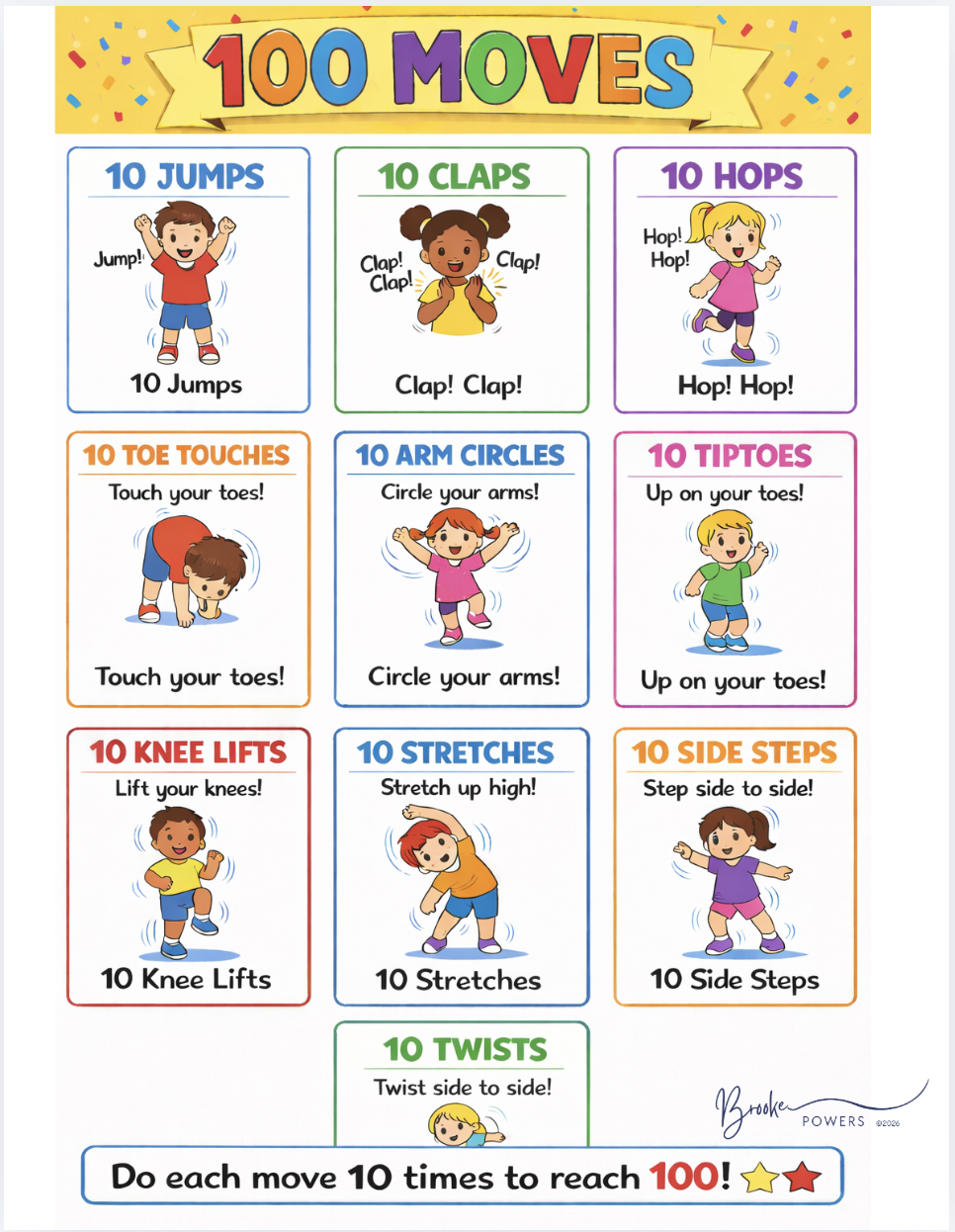
At our 100 Moves center, students completed ten different movements ten times each. Jumps, claps, hops, toe touches, arm circles, tiptoes, knee lifts, stretches, side steps, twists. Counting by tens happened naturally because it made the work easier. Grouping was not a lesson. It was a strategy they discovered.
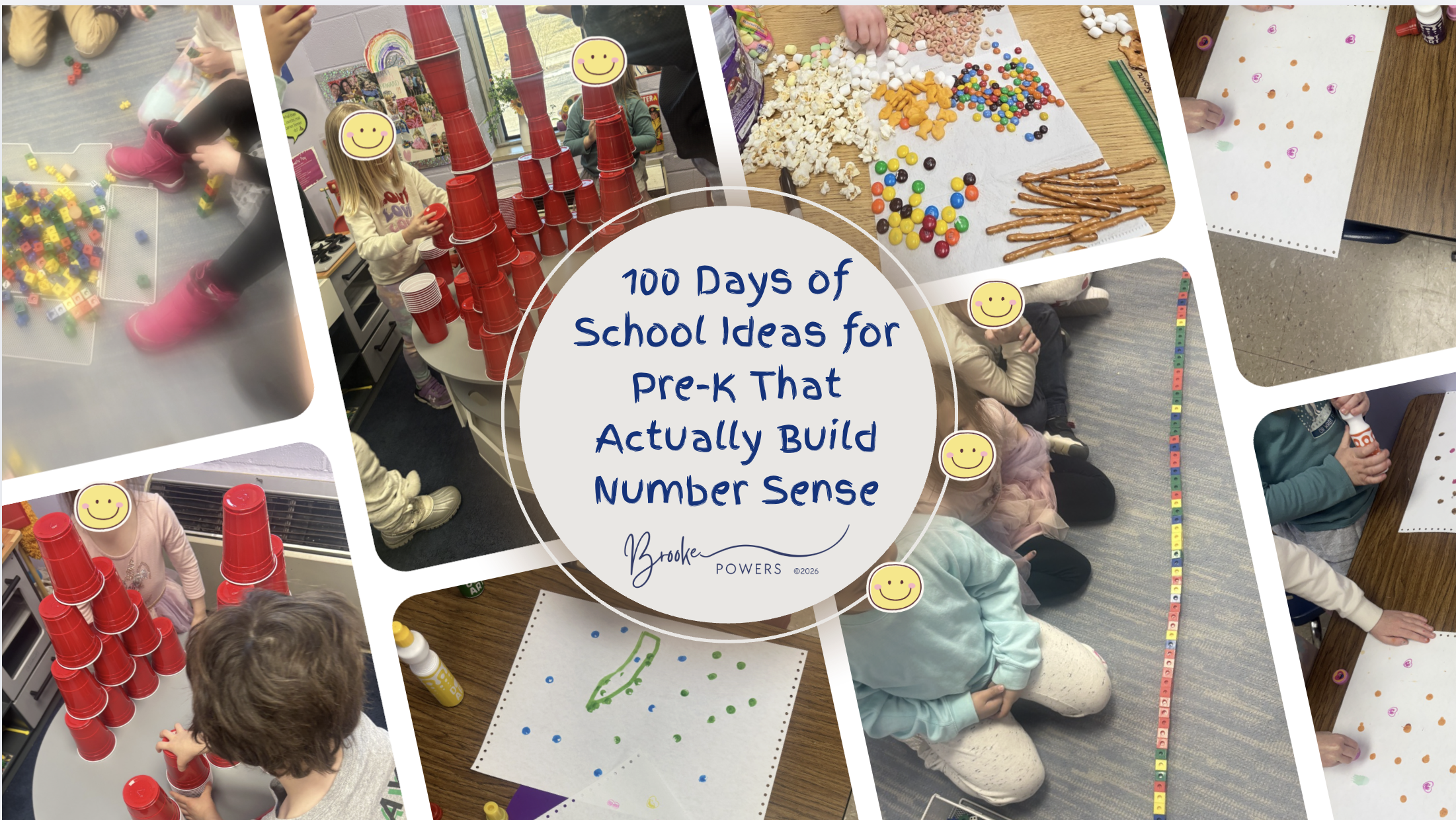
At another center, I gave them 100 cups and a challenge: build the tallest tower you can. They had to use all 100. Towers fell. Plans changed. They felt how much 100 really is when you are trying to balance it.
At the art table, students used dot markers and stamps to create a picture with exactly 100 marks. This one slowed them down. It strengthened one-to-one correspondence and careful counting without turning into a worksheet.
And then we made a snack mix. Ten ingredients. Ten of each. Count, combine, mix, eat. Concrete math you can taste.
Here is why I care about doing it this way.
When children develop strong number sense early, they are not just learning to count. They are building the foundation for addition, subtraction, place value, and problem-solving later on. When a child understands that 100 is ten groups of ten, that it is much bigger than 10, that it can be broken apart and put back together, that understanding carries forward.
The 100th day of school is fun. It should be. But it is also an opportunity. An opportunity to help young children see that numbers mean something.
If they leave the day with a clear mental image of 100, that is real learning.
If you are planning your 100th day, I would love to hear what you do in your classroom. What activities actually helped your students understand 100, not just celebrate it? Share your ideas. We are all 100 days smarter together.